
Every year we hear the same thing:
“I’m waiting until pollen season is over.”
But this spring, allowing contamination to sit on the surface may be doing more harm than many people realize.
Over the past several months we’ve seen:
- Unusually heavy winter contamination.
- Increased artillery fungus.
- Stubborn bonded fallout.
- One of the heaviest starts to pollen season we can remember.
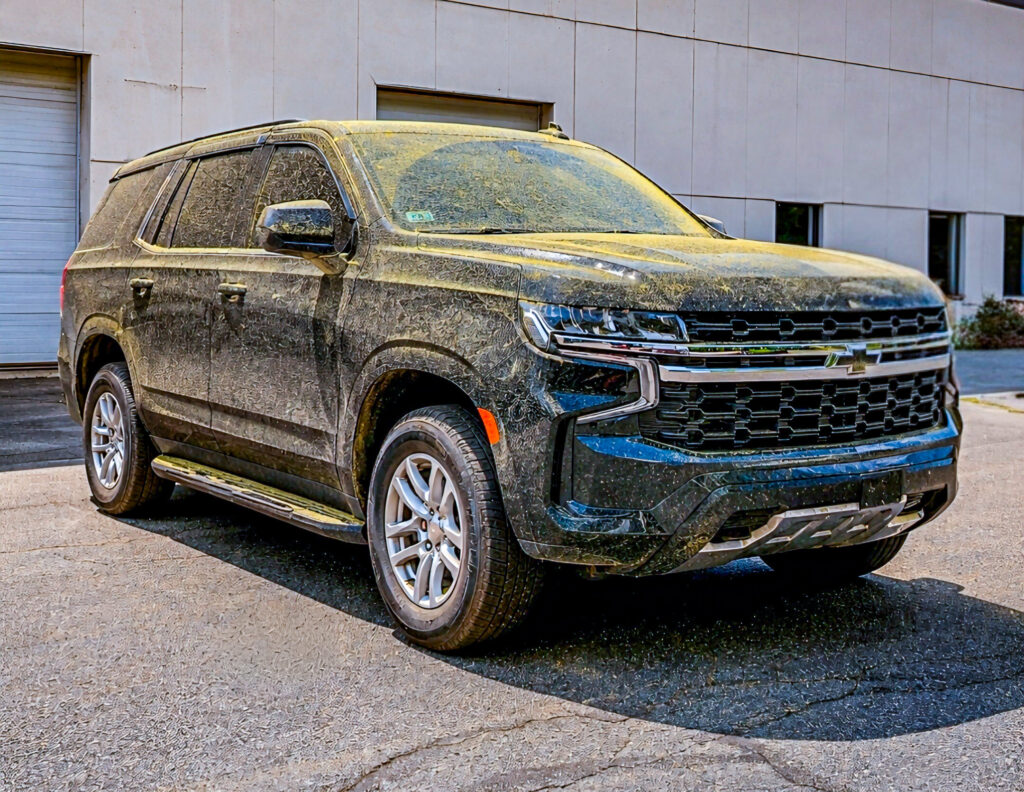
Even vehicles receiving regular washes have required multiple decontamination stages, and in some cases multiple clay bar processes, to safely restore the surface.
This month we wanted to take a closer look at what we’re seeing out on the road, showcase a few standout projects from the shop, and share a little of where our passion for this industry began.

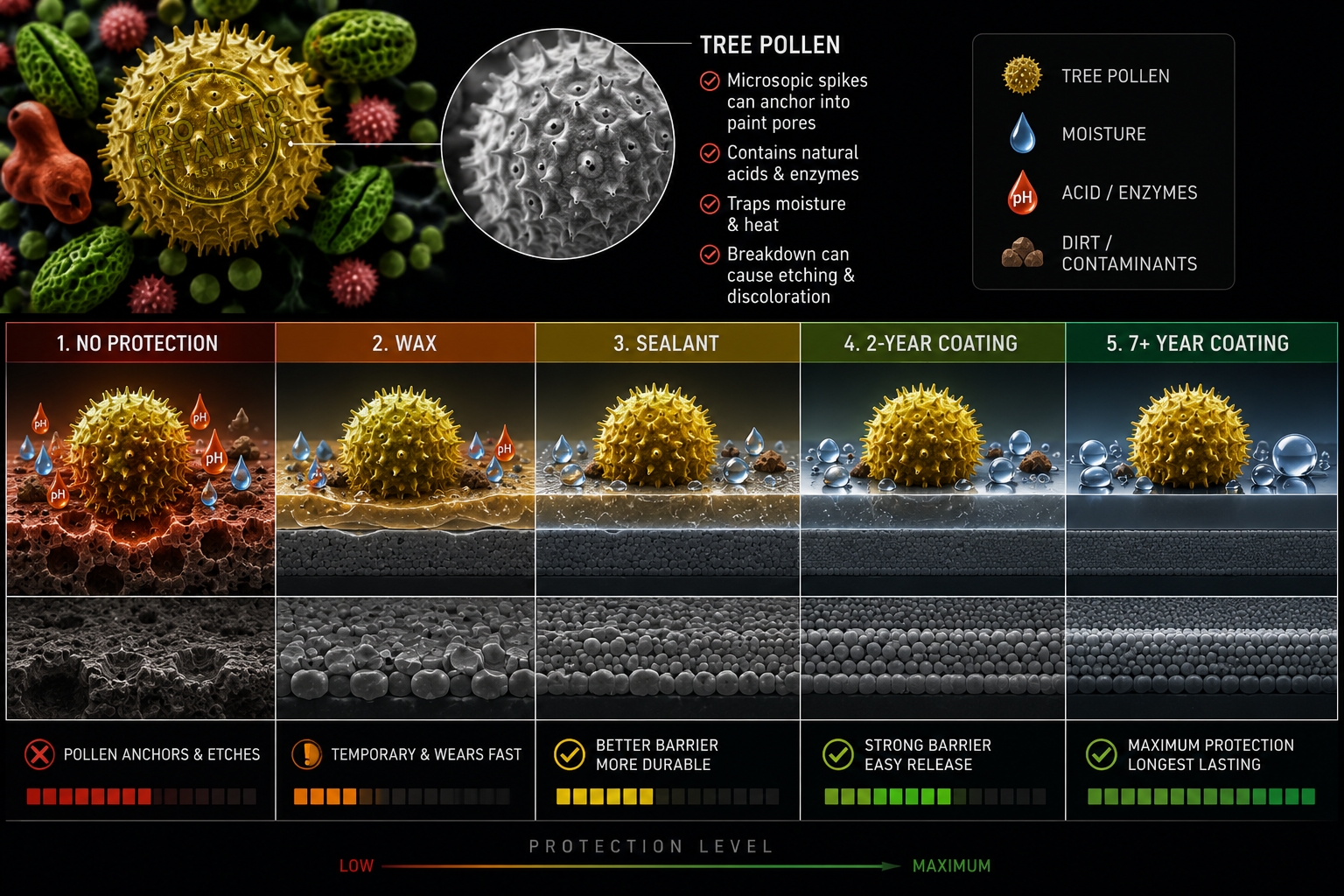
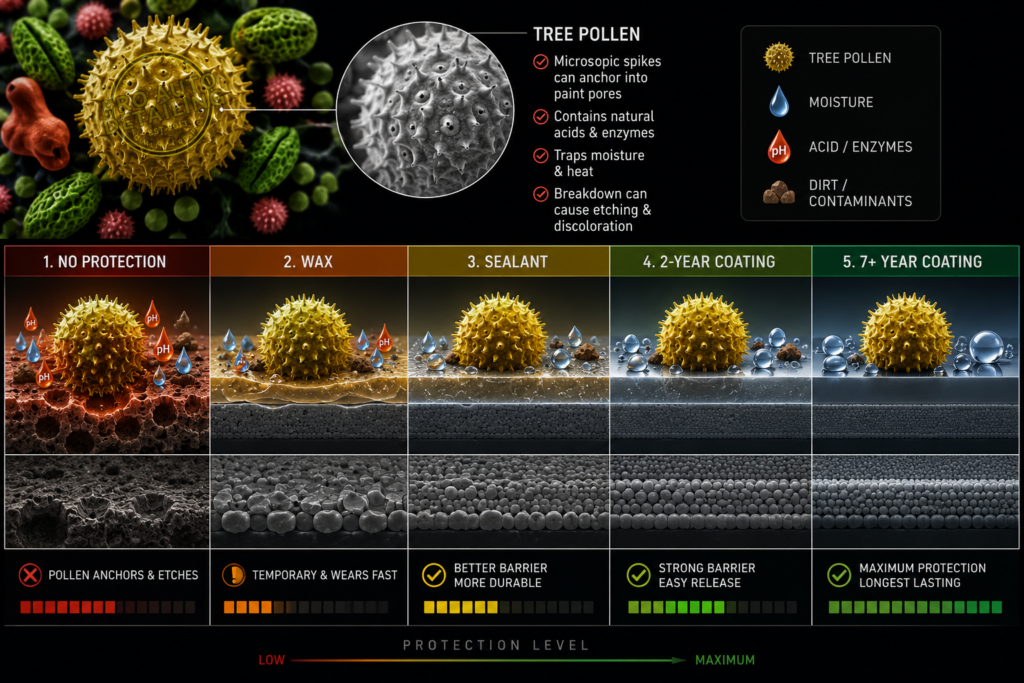
This visualization below illustrates how environmental contamination interacts with different levels of paint protection during pollen season.
Tree pollen is more than just yellow dust sitting on the surface. Under magnification, many pollen particles have sharp, spiked outer structures that can contribute to light marring or scratching depending on how the surface is maintained, how contamination is removed, and the level of protection present on the vehicle.
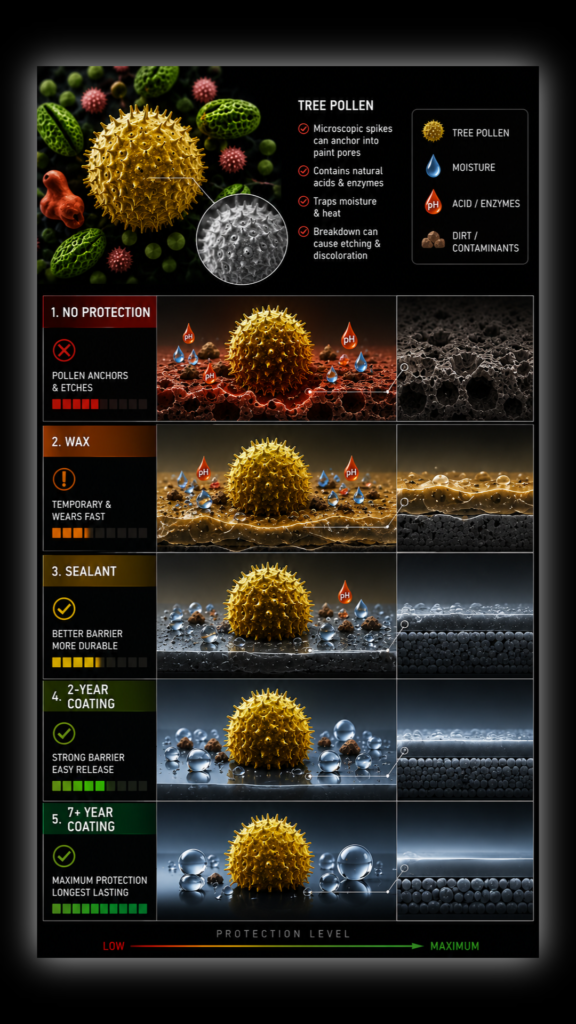
Combined with moisture, heat, acids, and environmental contamination, pollen can begin bonding to and breaking down against the finish over time.
As protection levels increase, from waxes and sealants to long-term ceramic coatings, the surface becomes more resistant to contamination buildup, easier to clean safely, and better protected against long-term environmental exposure.
No protection is permanent, but proper maintenance and quality protection can significantly reduce how aggressively contamination bonds to the surface throughout New England’s harsher seasons.
No responses yet